
The Rhythm for Reading blog
All posts tagged 'teach'
Dancing with Ofsted - ‘First Encounters’
4 September 2024
About six years ago, sitting in a cosy office, with Headteacher ‘Liz’, I had heard all about the challenges that her rural school was facing. Every child that she mentioned had a different kind of problem. Some were still in the early stages of learning English; others were speaking English as their additional language but not yet reading, and there was no way of knowing whether there were other factors such as dyslexia, attention deficit or autism, that might account for all the issues that the teachers were dealing with. Staff retention was also a concern and I could see from the change in Liz’s pallor that she was not happy with the situation, especially as Ofsted was due quite soon. There was a feeling of relief when I explained that, based on all the results I already had, she would most likely see an improvement in the children’s attention and reading after week three of the Rhythm for Reading Programme.
Together, we watched a two minute video, which showed children engaged in the rhythm-based exercises of the group intervention and we also learned from the Deputy Head of that school that after only four weeks, the children were more engaged, and were able to comprehend and predict what was coming up in their reading.
After watching the video we talked about the Rhythm for Reading programme and how it first began. When I explained how Ofsted had actually been involved, Liz was astonished and thought that I must have been ‘very scared’ at the time. Actually, I had really enjoyed my first encounter with Oftsed and this is how it happened.
About thirty years ago, shortly after John Major’s Government established ‘Ofsted’ (Elliott, 2012), I received a call from the senior leadership team of a primary school. A group of year five pupils, who were eligible for ‘Free School Meals’ were struggling with anger management, were disruptive and had fallen far behind in their attainment in terms of age expectation. Could I help?
The school called me because I had built a bit of a name for myself in the local Music Service. My phone would ring almost every day with new offers of work. I was keen to keep the momentum going and listened with interest as the class teacher described the complex behavioural problems of these children. Little did I know that my whole world was about to change.
My first experience of teaching these children taught me so much, as they were not able to learn in the conventional way that I was used to teaching. After twenty minutes of my most upbeat efforts, in which I launched a stream of activities and learning games, there came a dismal moment: I admitted to myself that they were not learning anything at all. The children seemed to read my mind and their brave exuberance drained out of their pale little faces. There was a strange moment of utter stillness. I could see dread in their eyes. It would be too easy to say ‘this was not for them’ in a very kind way, and I didn’t want this to end in ‘defeat’ for anyone. On the other hand, what alternative was there?
I looked out over the playground and the fields, the line of trees and puffy clouds and wondered if the answer lay outside, outdoors, in nature. I asked them what they liked to do after school and they boasted about their footballing skills. They lived on the same estate. Of course, I had perhaps made an obvious mistake - I had tried so many things already, but I had forgotten all about their feet. I quickly discovered that they were so much more comfortable when they were standing up and using their feet. The same effort went into this new ‘game’. Everything they did began in chaos but at least I could see signs that they wanted to improve the way they were moving their feet. Finally, they were learning - at last there were signs of progress!
Each week, we would spend a few minutes working first with their feet and they gradually built control and extended their focus. All the while, I would keep one eye on the glass door, nervous that someone might ask me what I thought I was doing. It felt so very dangerous to try something new. Weeks turned into months and they could play well known songs by ear on the cello, and had developed a solid technique. They had made faster progress than I’d expected, based on teaching other children of the same age, and one day, I announced that we were going to learn to read musical notation.
Once again, all the colour drained from their faces. They were agitated, anxious and horrified by this idea, protesting that it would be too hard.
After all these lessons, do you really think I would allow you to struggle? I asked.
The following week, I introduced the group to very simple notation and developed a system that would allow them to retain the name of each musical note with ease, promoting reading fluency right from the start. This system, now an integral part of the Rhythm for Reading programme, was first developed for these children, who according to their class teacher, were neither able to focus their attention, nor to learn along with the rest of the class.
After only five minutes, the children were delighted to discover that reading musical notation was not so difficult after all. They shrieked with glee when they realised that they were fluent and that it was easy! There was a wonderful atmosphere of triumph in the room that day.
After six months, the entire group had developed a repertoire of elementary pieces that they could play together and as individuals. I had been vigilant every single week, watching the door to make sure that my unconventional teaching method - (which meant that learning was done standing rather than sitting) was not seen.
One day, just as the children had finished the rhythm-based exercises, there was a knock at the door and ‘Mr Brown’, the Headteacher came in, ashen faced. I was so concerned and felt certain that someone had reported me for using an unconventional approach. I smiled and waited for him to speak. The children may have picked up on my fear and sat still, barely breathing.
We could not have been more surprised when ‘Mr Brown’ asked the children to play in full school assembly in front of Ofsted Inspectors on the final day of the inspection. Everyone was thrilled when I said, “Yes of course!”
The children wanted to be ‘celebrities’ and this would be their moment. As their playing was already very good, we practised announcing, and taking applause with an elegant bow. Their stagecraft was actually great and I looked forward to their big day. For me, as a visitor, this was a huge honour and I was simply delighted that these children, with all their complex behaviours were going to receive applause from the whole school.
They played as a group and as soloists. Each child announced the title and composer of their chosen piece, played impeccably, took applause with such grace, and then walked with their instrument to the side of the hall. At the end of the assembly, the children (who I was told were now working at age expectation in the classroom) were invited to join the school orchestra and sit alongside their more privileged peers. The Ofsted team placed the school in the top category, ‘Outstanding’.
At that time I had no idea that in the future, I would retell this story so often. In conferences, in my PhD, to headteachers and now to you - the most important ‘takeaway’ is that these pivotal moments when we choose a new path - and do so for the benefit of others - can prove to be the most exciting decision, as unforeseen new possibilities can open up for everyone.
Reference
Elliott, A (2012) Twenty years inspecting English schools, Ofsted, 1992-2012, Rise Review, November 2012, accessed 4.9.2024,
Did you enjoy this post?
To discuss your school’s needs, you are welcome to book a no obligation Discovery Call.
If you would like to book training for your team, we have an in-person option, as well as digital CPD. Book in-person training here and digital training here.
Why not continue reading?
Find out what happens when Rhythm and Phonics collide!
Discover the relationship between flow and rhythm in fluent early reading.
Dive deep into linguistic structures where rhythm and reading comprehension intersect.
Musical teamwork and empathy
28 February 2024
Image credit: S.B. Vonlant via Unsplash
Teamwork
There’s tension in teamwork! On the one hand there’s the idea that ‘teamwork makes the dreamwork’, pointing to the ideal situation in which everyone pulls together to attain goals that are shared and for the good of the whole community - for instance in a social enterprise. The maxim, ‘There’s no ‘I’ in team’ tells us that people sometimes contribute to teamwork with other intentions - perhaps they see it as an opportunity to outshine, usurp or even exploit the efforts of others.
Let us think for a moment about a community of traditional hunter gatherers, researched by anthropologist Jerome Lewis at ULC. They have life ways built on teamwork: - Women and men carry out their day-to-day roles in separate groups and the two groups alternate in terms of taking on the responsibility for leadership and decision-making. In this way, the community maintains a rhythmic balance, like the swing of a pendulum, between the perspectives of the men and then the women. The elders of the community, particularly the women, encourage everyone to ridicule any young person who wants to be louder, faster or smarter than others in the group.
The qualities of teamwork have also been studied by neuroscientists and there are no surprises here. Teamwork involves joint action, communication and empathy: people’s actions naturally fall into coordination with one another. We see this in social situations where there is obvious mirroring - one person sips water from a glass and then others at that table do the same, perhaps as a symbolic intention of unity.
On the one hand, there are distinct disadvantages to group behaviour and teamwork, because imbalances within the group can generate a false sense of security, potentially affecting many people:
- ‘groupthink’ - when people are not able to discuss matters openly and one opinion dominates,
- bias - when clear thinking is sidelined by ideology and the whole group loses touch with reality,
- double standards - when a minority abuse the value system held by the group to dominate and repress the majority.
On the other hand, the advantages of teamwork and a sense of group membership are beneficial in the long term for our health and well-being. For example, it is easier for us to coordinate repetitive actions with others and to communicate regularly in small groups. This is because as humans, we are hard-wired to rely on group effort to guide both our day-to-day behaviour as well as our longer term goals. Teamwork is advantageous in the long term in the following ways:
- it is economical in terms of energy expenditure,
- coordinated actions look and sound impressive to outsiders,
- predators will likely be deterred, and
- people feel they belong and are safe.
Musical teamwork
In both contemporary western cultures and extant hunter gatherer societies, humans are coordinated in time by feeling a shared rhythm - whether that is via a physical action, a chant or a song. The repetitive nature of many actions means that the movement is not only coordinated in time but also refined in space.
This is a natural phenomenon that applies to most species - for example, bees secrete wax and form hexagonal cells in honeycomb because a hexagon shape allows for economic use of repetitive, rhythmic movement and energy, without compromising the stability and strength of the cell walls. We see a stylised version of this in formal military displays around the world, and a more relaxed version in informal crowd behaviour (such as a ‘Mexican wave’ or clapping in time) at cultural events for example at a sports stadium - whether enjoying a match or a pop concert.
The formation of a group identity in the context of working together involves mutual trust, respect, a desire to achieve results through coordinated precision and also the flexibility that is needed to achieve an optimal result. In musical teamwork, this level of cooperation is practised as a discipline ‘for its own sake’ because the people involved share joint musical goals. These might be modest such as journeying through a new musical score, or writing a new song together. The joint experience of traversing the musical ‘unknown’ is mysterious and requires coordination and coherence - similar to navigating a cave in the dark. Or, the goal might be more aligned with artistry, such as working together to balance all of the nuances of a known piece of music, so that the performance of a particular work comes across as a sublime entity of perfectly structured, balanced, ’architectural’ proportions, although in real time.
So, in describing different types of joint action in music - as in many things - it becomes obvious that some teams could be described as ‘elite’ and some as ‘inclusive’. In both groups (provided there is a sense of joint action, trust and positive teamwork) the neuropeptide, oxytocin (aka ‘the love hormone’) works quickly to build bonds between people and to form what are known among social psychologists as ‘in groups’ and ‘out groups’ (a power imbalance usually favours the ‘in group’).
For instance, in the Rhythm for Reading programme, we uphold an inclusive ethos. This is very important as everyone involved must feel that they can play a meaningful role in contributing to the effort of their group, each week. When, on occasion, a teacher has tried to introduce a new child into a group of ten children, or to swap two children between different groups (there may be six groups of children taking part in one school), the trust and the bonds in the affected groups may be dissolved, probably because of the influence of oxytocin on group identification..
So, to sum up, teamwork is an important and impactful aspect of the Rhythm for Reading programme.
Musical teamwork and empathy
An abundance of research findings point to the ‘prosocial’ impact of joint music-making (Hallam and Himonides , 2022). Being involved in music making requires sustained and coordinated joint action. For example, each person is aware of their own contribution, but they also have oversight of, as well as respect and responsibility for, the overall effect. In other words, each person would be listening and personally invested in the balance of the music in terms of its:
- musical texture - anticipating and blending their own sound in proportion to the sounds of others,
- pitch and melodic line - anticipating and aligning a single pitch or a melody with the pitch of others,
- rhythm and tempo - keeping in time with others, anticipating and contributing to the vibrancy of shared rhythm, and
- harmony - phrasing and blending their own sound within a shared ownership of harmony and structure.
In the anthropological work of Jerome Lewis, joint music making within the community of hunter gathers involved singing to their homeland - the nature around them in the Democratic Republic of Congo (DRC). Each level of richness of the equatorial forest was represented in their complex music, so that within communal music making, many rhythms and melodies were sung, balanced, and harmonised together. If one person protruded or was conspicuous, the precious balance of the musical ecosystem was lost and that person would be known as, ‘an energy thief’.
In music education in the UK, different types of music tend to require different kinds of musical interaction. These might include:
- playing in time with others, focussing mainly on synchrony and tight coordination,
- holding a completely different line and harmonising, with additional demands on cognitive control, or,
- alternating with each other, with room for greater individual expression, improvisation and flexibility.
Each of these examples emphasises what could be loosely described as a different musical skillset, but at the heart of all of these examples is the need for: empathy and ‘theory of mind’ - being able to read the intentions of others and respond accordingly,
Musical notation, teamwork and empathy
- If we feed a child nourishing food, we can say this has enhanced their health.
- If we place a child into stimulating musical training, we can say this has enhanced their empathy.
- If we place a child into an intervention which teaches them to read musical notation, we can say this has improved their reading skills.
There is a clear pattern of cause and effect, but millions of years of evolution have primed us to respond to optimal experiences that promote health, empathy and communication. This is why children are known to respond positively to an enriched environment (and why an enriched environment is also known to accelerate learning in animals, such as mice and rats).
A more worrisome situation arises when children from disadvantaged social backgrounds, whose fundamental needs of adequate nutrition, shelter and safety (physical, social and psychological), may not have been addressed, are placed into underspecified musical interventions where they are expected to thrive. This may be why many music education research studies have achieved such mixed results (see Hallam and Himonides, 2022 for a comprehensive review).
Closing thoughts
In the Rhythm for Reading Programme, the safety of the children is always the top priority, and this includes ensuring that on a weekly basis they experience a strong sense of:
- belonging - through working as a team, and coordinating with the specially composed music in a consistent way,
- fluency and ease - through reading simple notation enriched by patterns, repetition and novelty,
- happiness and enthusiasm - through participating in shared moments of collective joy.
To read about the extraordinary impact of the Rhythm for Reading programme on children’s reading comprehension click here.
To book a call and discuss group teaching and the needs of children in your school, click here.
If you enjoyed this post, keep reading!
Breath is an important part of the Rhythm for Reading programme. We use our voices as a team in different ways and this engages our breath. In the early stages of the programme we use rapid fire responses to learn the names of musical notes and our breath is short, sharp and strong - just like the sounds of our voices.
Confidence and happiness in the Rhythm for Reading programme
This post describes the tenth of ten Rhythm for Reading programme sessions. By this stage in the reading intervention, everyone in the group can sight-read both simple and comparatively complex music notation with ease and confidence. To do this, our eyes are glued onto the board, our voices are synchronised and we’ve gelled through teamwork.
By nine years of age, children have assimilated a vast amount of information about their culture simply by learning through experience. Enculturation is a particularly powerful form of deep learning that shapes children’s attitudes and perceptions of the world in which they are growing up. Through working in many schools, I’ve observed that by the age of nine years, children have, through this process of enculturation developed a strong emotive response to the concept of ‘teamwork’.
Learn to read music and develop executive functions: The exception rather than the rule
The Rhythm for Reading Programme creates an environment that allows pupils to focus their attention right from the start. They learn to read music by repeating, reviewing and practising key concepts each week, consistent with the principle of ‘spaced practice’. Consistent rehearsal of musical notes using visual images, as well as hearing and saying the note names, illustrates the principle of ‘dual coding’. The programme is built on a cumulative structure that prioritises fluency, as well as a light ‘cognitive load’ and there is a gradual increase in the complexity of tasks within the context of working together as a strong and enthusiastic team.
References
Hallam, S. and Himonides, E (2022) The Power of Music: An exploration of the evidence, Cambridge: Open Book Publishers
NB References to Jerome Lewis are from personal notes taken during public lectures given by Radical Anthropology Group, Department of Anthropology, University College London.
Wishing you Peace at Christmas time: Rest and Replenish
20 December 2023
Tomorrow night is the longest night of the year in the northern hemisphere and here in London, the heavy grey clouds and the weight of the damp atmosphere have added a dense layer to the fatigue we are all feeling right now.
So as the school term draws to an end, I thought I’d share reflections on one of my favourite picture books: “A Seed is Sleepy,” by Diana Hutts Aston and Sylvia Long, published by Chronicle Books, San Francisco, California.
‘A seed is sleepy.
It lies there, tucked inside its flower,
On its cone, or beneath the soil, Snug, Still.’
This is the time to reclaim our need to sleep, and to sleep long and deeply. This is the season for rest, and teachers, having given out so much energy every single day, need this. Nothing is more important than rest and recovery after a long term of thirteen or even fourteen weeks. This is the time to be still and snug in the dark and the quiet of the longest winter night.
The time that a seed may take to reveal itself is encoded in its DNA. Each seed needs its own allotted period of time. There is no rushing this process. Some seeds need ten years and some need even longer.
‘Not all seeds are eager to germinate.
Some have lain dormant, or slept undisturbed,
For more than a thousand years.’
We need sufficient time to replenish our own physical energy and this applies to each and every cell. There might be a feeling of numbness. We might feel a little spaced out because of sheer exhaustion - a bit like being jet-lagged. We might feel tearful and emotional, or jittery and struggle to unwind. This is especially true if we have been chronically overstretched and have strained our nervous system without having a chance to recover. The seed shows us what to do.
‘Part of the seed, the root,
Feels the tug of gravity and
Digs down deep.’
The work of the seed is nourishment. Resting and recharging is also about spending time on replenishment. Just like a seed, our nervous system seeks out minerals and hydration. Little by little, as recovery progresses we realise that we are ready to receive light and love from our friends and family. There is, however no rush in the life of the seed. It can take time to reach upwards.
‘It knows to seek the sunlight
To push itself up, up, up
Through the soil But it must
Wait awhile before that happens.’
Each seed takes its own time. The diversity of seeds is part of the great mystery of nature. The tallest trees grow from the tiniest seeds and the most exquisite fruit of all (coco de mer) sprouts from the largest pod. Every shape and size in between has been designed through millions of years of evolution, adaptation and plenty of rest.
Happy Christmas! Rest well dear friends!
Danna Hutts Aston and Sylvia Long (2007) A Seed is Sleepy, Published by Cronicle Books, San Francisco, CA
It’s anti-bullying week: How does fear affect learning?
15 November 2023
Recently, I read that an act of aggression is a natural ‘active coping strategy’ and is rewarded by a dopamine hit. Conversely, a submissive, ’passive coping strategy’ results in stress-induced withdrawal and even generates a ‘shutdown’, an immediate energy-conserving behavioural response. The setting for these social experiments was a laboratory. The brains of mice and rats were dissected following each behavioural task. Slices of tissue were examined to determine the levels of reward and stress induced by each type of ‘social situation’ manipulated by the researchers.
How does this relate to anti-bullying week? Well, in terms of brain structure, neurochemistry and behavioural responses, mice and rats are considered to bear a close enough resemblance to humans to deem such work ethical, justifiable and relevant.
Are children born knowing that bullying is inherently immoral, or, are we dealing with impulses that are ‘natural’ and therefore ‘justified’ on the grounds that ‘children will be children’?
This is the question that Ruter Bregman addressed in his wonderful book, ‘Human kind’. On the one hand, there is the view that humans may possess abhorrent traits, for example, John Adams’ vision of all men as ‘potential tyrants’ and Sigmund Freud’s thesis that we descended from ‘generations of murderers’. On the other hand, Rousseau’s much earlier realisation that the moral compass of humans had in fact been corrupted by land ownership and the extent to which social institutions (such as the baronial system) rewarded competitive and ‘loyal’ behaviour with enhanced social status, titles and land. This socially hierarchical system was normalised to such an extent that as humans, we lost touch with our natural compassion, health and vigour. Moreover, Bregman’s research showed that Rousseau’s argument was supported by countless examples of human courage and kindness. Furthermore, he discovered that explorers of the eighteenth century and the mainstream media had constructed blatantly false narratives that claimed dreadful events of human brutality had taken place, particularly within communities that lived traditional life-ways.
In the past year, stories of bullying as a global phenomenon have peppered the mainstream news. These have included an account by Raphael Rashid of a weekend rally of 200,000 South Korean school teachers protesting against the harassment they received from parents and that among their colleagues, one hundred teachers’ lives had been lost to suicide.
In southern California, Ramon Antonio Vargas reported on the lawsuit brought by the parents of fourteen year old school boy Diego Stoltz against the school district. Two of Diego’s own classmates had verbally and physically assaulted him, and he had lost his life to the injuries nine days after the attack. This took place on the school premises at lunchtime and another child had videoed the violence. This story shows that there is no room for complacency when enforcing an anti-bullying policy. Bullying is not just dangerous and corrosive, it can be fatal.
Complacency can be driven by an unease around standing up to bullying. However, in a school with effective leadership, where it is not tolerated at all, a strong ethos exists in terms of respect for teachers, pupils, learning equipment, school uniform and the fabric of the building. Expectations of high standards, however, are not necessarily self-sustaining: they are earned through consistent maintenance - it takes effort to keep children safe.
I visit schools every week and see teachers working hard to ensure that respect is maintained by a deliberate commitment to upholding the high behavioural values of the school. This is clearly visible when pupils move between lessons in every corridor and flight of stairs.
It is easy for standards to slide. When this happens, how might bullying affect learning? There are two main ways. First, if the atmosphere in a school lacks respect and tolerance, then pupils will feel hyper-vigilant and their attention will drift because they are alert for the wrong reasons, anticipating threat and wondering how to strategically position themselves for safety. This response is a necessary behavioural adaptation, but it diminishes cognitive focus, control and recall. Learning suffers.
The second way bullying affects learning is more insidious. It’s a narrowing of the bandwidth of ideas that pupils are willing to contribute and the questions that they are willing to ask in a classroom where individual contributions are not respected. In a culture of bullying, the perspective of the bully overrules opportunities for discussion, clarification and exploration. To move beyond ‘one size answers’, to ‘multiple answers’, pupils need to feel comfortable with expressing individual opinions or engaging with perspective-taking and the influence of context.
Deeper learning is also limited for one more reason, the so-called ‘narrowing of the curriculum’. The squeezing of arts subjects to the periphery of the curriculum is a huge loss in itself, but particularly so in this context, as arts subjects cultivate discipline, self-expression, dialogue, and prioritise collaborative working.
To conclude, the importance of enforcing an effective anti-bullying policy cannot be overstated. It is more than a matter of wearing odd-socks on ‘Odd socks day’. All schools must become places of safety, security and respect. Pupils who already carry visible negative effects from exposure to stress in early childhood, for example, need to know they will not be targeted, as they are vulnerable through no fault of their own. They deserve to focus their attention on learning and thriving as much as anybody else.
Research shows that headteachers who are successful leaders, with a strong vision and a clear set of values, have established an ethos of respectful conduct for everyone in the school community. An anti-bullying policy that works at all levels of implementation is the key to maintaining an effective and inclusive learning environment.
If you enjoyed this post, sign up for free Insights to get a weekly newsletter and special discounts on Rhythm for Reading Online Programmes.
Read more about this topic by clicking the links below
We often hear about the dangers of cyberspace, where cyber-bullying is rife and children are vulnerable. Now imagine for a moment the relief of reaching the ultimate refuge. Temenos is a Greek concept that describes a sanctuary, a space of absolute safety and harmonious balance, where individuals uphold an immutable self-respect and where criticism and judgment are suspended.
Mythical tales of abandonment, involving fear of the jaws of death followed by the joy of reunion are familiar themes in stories from all around the world. Sound is a primal medium of connection and communication via mid brain processes that are rapid, subjective, subtle and subconscious. Similarly, the telling of stories, the recitation of poems and songs are also examples of how auditory signals are woven together to communicate for example fear, distress and joyful reunion, or other emotions.
Rhythm and reading comprehension 1/5
In the Simple View of Reading, reading comprehension is described as the ‘product of’ skilled decoding and linguistic comprehension (Gough & Tumner, 1986). The recent focus on oracy (for example Barton, 2018) highlights a focus in some schools on linguistic comprehension. According to researchers, the proportion of children beginning school with speech, language and communication needs is estimated at between 7 and 20 per cent (McKean, 2017) and unfortunately, communication issues carry a risk of low self-esteem and problems with self-confidence (Dockerall et al., 2017).
References
Rutger Bregman, Human kind: A hopeful history, Bloomsbury Publishing
Raphael Rashid, South Korean teachers stage walkout over harassment by parents and students 4th September 23, accessed 26th October 23
Ramon Antonio Vargas and agencies, Family of boy, 13, who died after bullying attack get $27 million from school district, 15th September 23, accessed 26th October 23
Musical notation, a full school assembly and an Ofsted inspection
10 January 2023Many years ago, I was asked to teach a group of children, nine and ten years of age to play the cello. To begin with, I taught them to play well known songs by ear until they had developed a solid technique. They had free school meals, which in those days entitled them access to free group music lessons and musical instruments. One day, I announced that we were going to learn to read musical notation. The colour drained from their faces. They were agitated, anxious and horrified by this idea.
No! they protested. It’s too hard.
After all these lessons, do you really think I would allow you to struggle? I asked them.
The following week, I introduced the group to very simple notation and developed a system that would allow them to retain the name of each note with ease, promoting reading fluency right from the start. This system is now an integral part of the Rhythm for Reading programme. It was first developed for these children, who according to their class teacher, were unable either to focus their attention or to learn along with the rest of the class.
After only five minutes, the children were delighted to discover that reading musical notation was not so difficult after all.
I can do it! shrieked the most excitable child again and again, and there was a wonderful atmosphere of triumph in the room that day.
After six months, the entire group had developed a repertoire of pieces that they could play together as a group and as individuals. It was at this point that Ofsted inspected the school. The Headteacher invited the children to play in full school assembly in the presence of the Ofsted inspection team. They played both as a group and as soloists. Each child announced the title and composer of their chosen piece, played impeccably, took applause by bowing, and then walked with their instrument to the side of the hall. At the end of the assembly the children (who were now working at age expectation in the classroom) were invited to join the school orchestra and sit alongside their more privileged peers. The Ofsted team placed the school in the top category, ‘Outstanding’.
If you would like to learn more about this reading programme, contact me here.

Sensitivity to rhythm is all around us
14 November 2022A few weeks ago, in an inset session at a wonderful school with beautiful inclusive approaches in their group teaching, I mentioned that rats have the same limbic structures as humans. The limbic system is the part of the brain that deals with our mammalian instincts. These keep us in tune with social information, such as social status and hierarchy, protecting and nurturing our children, bonding with sexual partners and managing affiliation. It’s a logical assumption that if we share these limbic structures, rats like humans should be able to keep time with a musical beat - or their equivalent of that. So, it was no surprise to learn that Japanese researchers have shown that rats can indeed bob along and keep time with a musical beat.
It was back in the 1980s, when American scientists first discovered the genes that determined the rhythm of the mating song of fruit flies. If we think of rhythm as a musical trait exclusive to humans, these findings in rats and flies are simply amusing, novel or entertaining. On the other hand, the bigger picture behind these findings would suggest that the natural world is inherently structured by environmental and behavioural patterns organised by rhythm. If we think of rhythm as a system of ratios, proportions and repetition, then the math of rhythm is obvious. There are cycles and rhythmic flows in tides and weather systems and indeed, migration patterns follow these cycles. In individual organisms, as well as in shoal, pod, flock and herd movement, rhythmic patterns underpin locomotion and communication. Even a human infant’s stepping reflex is organised around the inherent rhythmic systems that we share with many other species.
We humans are particularly happy when our stylised rhythms achieve a hypnotic effect, for example in Queen’s ‘We will rock you,’ - one of the songs used by the Japanese scientists to detect the sensitivity to rhythm in rats. Halfway through the Rhythm for Reading programme, this same rhythmic pattern appears and is always greeted with enthusiasm by teachers and children as a fun part of the reading intervention. Look out for the next post, which explains the connection between hypnotic rhythm, flow states, reading fluency and reading comprehension.

When Rhythm and Phonics Collide Part 2
11 November 2022In my last post I described a typical challenge facing a child with poor phonological awareness. Using a rapid colour naming test (CToPP2), it’s possible to identify that a weakness in processing the smallest sounds of language often occurs at the onset of a phoneme, in other words the onset of a syllable. Consonant blends and consonant digraphs are more affected, so, conflation between ‘thr’ and ‘fr’, or ‘cl’ and ‘gl’ is likely to happen and to impede the development of reading with ease and fluency.
The notion that sensitivity to both rhythm and the smallest sounds of language overlap in terms of data has been around for decades. A positive correlation between sensitivity to rhythm and phonemic sensitivity has been shown in many studies. It’s easy to understand that rhythm and phonological processing overlap if we consider that the start of a phoneme - the onset of a syllable is exactly where sensitivity to rhythm is measured - whether that’s the start of a musical sound or a spoken utterance.
Thinking for a moment about words that begin with a consonant, imagine focussing mostly on the vowel sound of each syllable, without being able to discern the shape of the initial phoneme with sufficient clarity. The sounds would merge together into a kind of ambient speech puddle.
Vowel sounds carry interesting information such as emotion, or tone of voice. They are longer (in milliseconds) and without defined edges. Now imagine focussing on the onset of those syllables. The consonants are shorter (in milliseconds), more sharply defined and more distinctive, leaving plenty of headspace for cognitive control. If consonants are prioritised, information flows easily and the message lands with clarity.
The Rhythm for Reading programme addresses these distinctions through group teaching that is fun and supports early reading in particular. Information processing is enhanced by sensitivity to rhythm because rhythm focusses attention onto the onset of the sound, which is where the details are sharpest. This kind of information processing remain effortless, easy and fluent.
If you’d like to know a little more about this, the details are summarised in a free infographic. Click here.

Empowering children to read musical notation fluently
4 November 2022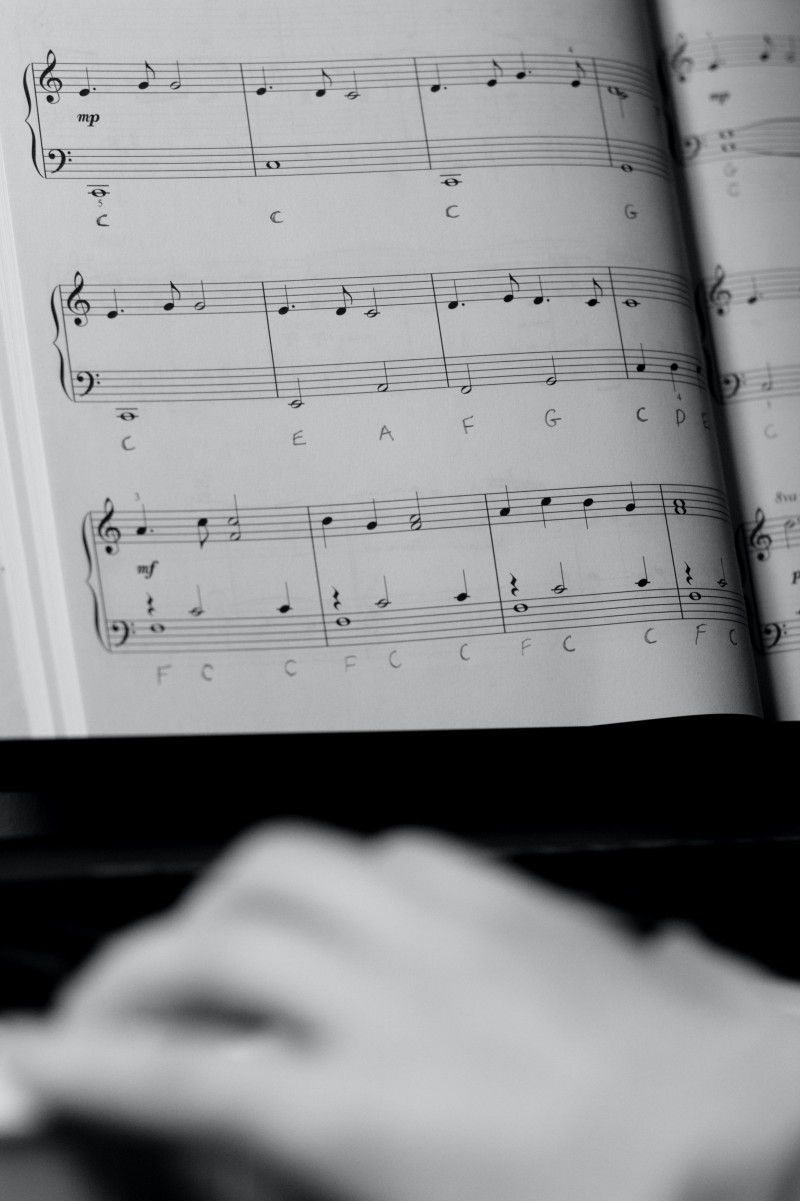
Schools face significant challenges in deciding how best to introduce musical notation into their curriculum. Resources are already stretched. Some pupils are already under strain because they struggle with reading in the core curriculum. The big question is how to integrate musical notation into curriculum planning in a way that empowers not only the children, but also the teachers.
The tried and tested ways of teaching musical notation are best suited to pupils who process information with ease. Traditionally, piano teachers begin with mnemonics for the notes that sit on the lines of the stave EGBDF (Every Good Boy Deserves Favour) GBDFA (Good Boys Deserve Fun Always) and for the notes that sit on the spaces FACE (Face) and ACEG (All Cows Eat Grass). Many teachers use these mnemonics to introduce a series of line notes and / or space notes all at once, which creates a heavy cognitive load.
What about all the children who struggle to process information, reading with ease and fluency?
Well-intentioned efforts to adapt musical notation for children who struggle to process the mnemonics, involve adding more information and increasing the cognitive load.
What is going on here?
Music teachers want children to enjoy making music and to have fun producing sounds on their instruments and they hope that in time, reading notation will gradually become familiar and easier to read. Until that point, music teachers add extra information to remind the child of the letter names of the notes. In the same vein, they often add numbers representing the finger patterns, to remind the child how to produce sounds on the instrument.
Soon enough, the page is cluttered with markings and the child has to select which ones to read.
These markings are intended as a quick fix, aiming to keep the child engaged. But of course the child relies on the letters, or the numbers, or both instead of reading the actual notes. This approach sets the child up to fail in the sense that they do not learn to read notation at all and even worse, assume that it is too difficult for them.
What could teachers do differently to support children who do not process information with ease and fluency?
A more inclusive approach would limit the cognitive load on children’s reading - which is what we do in the Rhythm for Reading Programme. Rather than teaching all the notes at once, we focus on just a few notes and develop fluency (and fun) in reading right from the start. Instead of learning the musical notes at the same time as playing musical instruments, which adds to the cognitive load, we simply use our feet, our hands and our voices, as we believe these are our most natural musical instruments.
Group learning in a structured programme supports the development of fluency, because the children are nurtured by the ethos of working together. Teamwork in combination with rhythm is an effective way to build fluency in reading, and acts as a catalyst for accelerated progress.