The Rhythm for Reading blog
All posts tagged 'teach'
Teaching Musical Notation and Inclusivity
31 October 2022The teaching and learning of musical notation has become a hot new topic since its appearance in the Ofsted Inspection Framework published in July 2022.
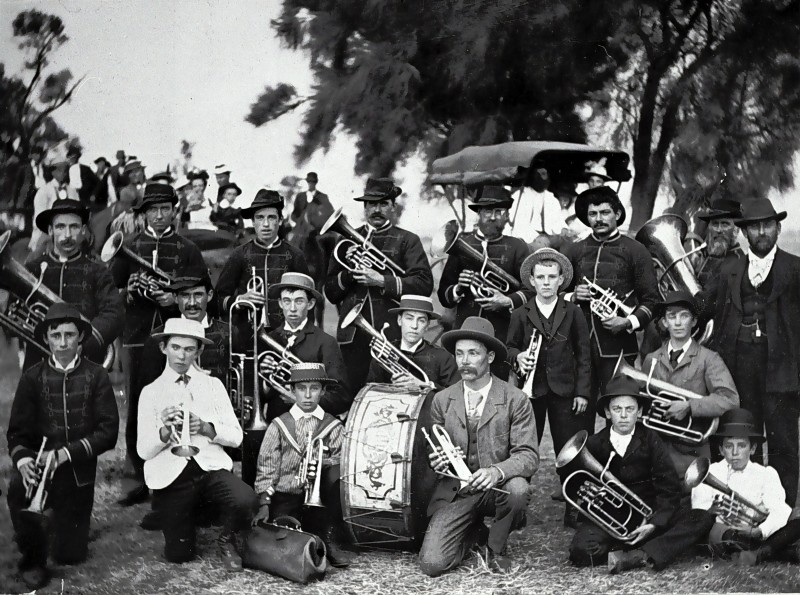
For too long, musical notation has been associated with middle class privilege, and yet, if we look at historical photographs of colliery bands, miners would read music every week at their brass band rehearsals. Reading musical notation is deeply embedded in the industrial roots of many towns.
As a researcher I’ve met many primary school children from all backgrounds who wanted to learn to read music and I’ve also met many teachers who thought that reading music was too complicated to be taught in the classroom.This is not true at all! As teachers already know the children in their class and how to meet their learning needs, I believe that they are best placed to teach musical notation.
There are many perceived problems associated with teaching musical notation in English primary schools, and a top one is that many teachers do not read music. It is so easy to address this issue. Using the techniques of the Rhythm for Reading Programme, teachers can learn to read music fluently in time with a backing track (think Karaoke) in five minutes. Yes - five minutes!
Empowering school staff to read music offers a cost effective and strategic approach to raising standards in reading across the curriculum.
Stay tuned for the next post, when I’ll discuss ways to meet all of these challenges.
Rhythm, breath and well-being
10 October 2022
Breath is an important part of the Rhythm for Reading programme. We use our voices as a team in different ways and this engages our breath. In the early stages of the programme we use rapid fire responses to learn the names of musical notes and our breath is short, sharp and strong - just like the sounds of our voices. Even in the first session of the programme we convert our knowledge of musical notes into fluent reading of musical notation and when we do this our breath changes. Instead of individual utterances, we achieve a flowing coherent stream of note names and our breath flows across the length of the musical phrase for approximately six seconds. This time window of between five and seven seconds is a universal in human cultures. Did you know that the majority of poems are organised rhythmically into meaningful units of between five and seven seconds in duration?
A long slow exhalation is associated with calming the nervous system, even though the energy in the Rhythm for Reading session is playful and the sense of teamwork is energising. The unity between the children and teachers taking part in the programme fosters a sense of belonging which further boosts well-being alongside the calming effect of the long slow exhale.
When I first meet teachers, they often share that they feel anxious about reading musical notation, but one of the most beneficial aspects of taking part, is that our long slow exhale as a group is actually an effective way to sooth anxiety. The smiles at the end of the first musical phrase show a powerful release of emotional tension through the unity of rhythm and breath.
Where has all the chanting gone?
2 October 2020

When I watched the announcements about lockdown on March 23rd 2020 from a hard metal seat in Glasgow International Airport, I’d already made ten trips to Scotland and it felt so frustrating that the project would be interrupted when we were so close to its completion. Throughout the lockdown and the summer months, I hoped very much that we would have a chance to salvage and finish off the work. In the past two weeks it has been an absolute privilege to return to the schools with ‘refresher sessions’ and follow-up testing. So much has changed. The teachers vigorously spray, clean and ventilate the classrooms. Everyone is vigilant and determined to keep their community safe. It is obvious that this goal is shared and held dear by all. Even young children immediately take all their books and pencils with them when they sit on the floor while their tables and chairs are disinfected. Absolutely nobody needs to be reminded to do this.
In one of the schools, particular spaces are filled with food and clothing. The leadership team came into the school every single day of the lockdown, as well as throughout the summer months to keep everyone on track; teachers worked face-to-face with the children throughout this period. Stunning new displays made by the parents now explode out from the staffroom walls and thank you cards are pinned to the noticeboard of a beautiful new community room.
Rhythm for Reading has been modified to keep everyone safe. I visit only one school in a single day and wear a mask. The children remain in their ‘bubbles’ when they take part, and stand at least two metres away from me. In between each session, I ventilate and vigorously disinfect the teaching area. Of course, there is plenty of time for cleaning as each Rhythm for Reading session is, as always, only ten minutes in duration. Actually, this level of flexibility fits in very well with the dynamic teaching that I’m seeing in the schools - and the children are loving that they are being taught in small groups and in an increasingly nuanced way.
Robust, energetic chanting has always been an important part of the Rhythm for Reading programme, but chanting, like singing is strictly prohibited. For quite some time I have been resigned to mothballing the programme for this reason. Eventually however, a neat solution popped into my mind. With a bit of experimentation, I realised that it is possible to vocalise safely and precisely, whilst keeping the volume level below that of normal speaking. All that is required to make this modification fun, is a little imagination. Most children know how to squeak like a mouse - these high pitched sounds are made in the throat and involve minimal breath - far less than speech. So, my solution has now been ‘road-tested’ by the squeaky teams in Scotland and I’m happy to have found a safe and new way to offer the programme without diluting it.
I would like to say a huge thank you to these children, teachers and school leaders for the opportunity to come back and complete the programme. It has been utterly inspiring, humbling and uplifting to visit your schools these past two weeks.
7 Reasons why goal-setting matters more than you might think
1 September 2020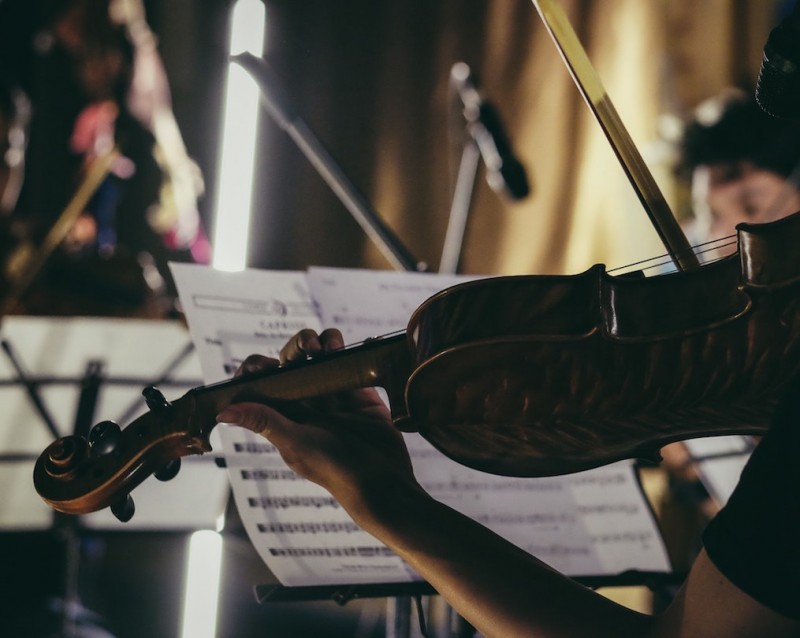
Mastering a musical instrument takes years of dedication. A music teacher who has already spent a lifetime on this journey, is the guide along the way and travels the path to mastery with every student. She knows exactly where each student is in terms of making progress and can describe in great detail what is happening in the music lessons.
Given that the music teacher offers a path to mastery and has lived that path every day for decades- why would goal-setting really matter?
Here are seven reasons why:
1. Goal-setting renews the relationship between the teacher and student. This is a life-affirming conversation in which the teacher can welcome each student back after a break and say to them, “I believe in you…I know you can do this”. Goal-setting offers the most uplifting start to the new term and can inspire a fresh new wave of commitment to making music with passion and vitality.
2. Goal-setting can alleviate stress. If I was a teenager right now, I would be feeling very sad without my musical ensembles - I adored being immersed in music with my friends and we had so much fun during the summer. Our students are likely to be suffering the loss of their musical ensembles and missing the buzz of group music-making. Organising remote concerts on a weekly basis as an important part of goal-setting will offset musical isolation.
3. Goal-setting clarifies the context. September is always a month of change. Perhaps your student has a new school, new travel arrangements, new responsibilities, or new musical or sports opportunities. With the excitement of a fresh new start, there will also be a demanding process of transition to consider. Settling into a new school takes at least six months - relationships with teachers and friends need to be built gradually over time. Being aware of your student’s challenges and opportunities this September clarifies what’s possible. This matters because it’s essential that goals are realistic and can be reached.
4. Goal-setting sets the tone for the term. Aspirational students like to set up a new routine at the begin of the school year. When and where have they scheduled their music practice? Whether your students are aspirational or not, a goal-setting conversation is the perfect way to guide them in choosing the best possible time for music practice. Take care to cultivate their ownership of this process, but also to protect them from feeling overwhelmed or sliding towards perfectionism.
5. Goal-setting warmly embraces parental expectations. This conversation allows the teacher to share with the parent a timely segment of their over-arching vision for the student. Each goal is anchored to the teacher’s expertise - and here’s a gentle reminder that this expertise often has a lineage reaching back through generations of dedicated teachers. Parents want to be informed and guided by an expert teacher; confidence in goal-setting allows a music teacher to demonstrate that their expertise is grounded within an organised and methodical system.
6. Goal-setting helps to align our teaching practice with our musical purpose. Stephen Covey is know for recommending that we ‘Begin with the end in mind’ - this is the second habit from his book, ‘The 7 habits of highly effective people’. This phrase applies to goal-setting. All the goals we set for music-making lead us to the very centre of our musical aims - our ‘why’ - our inspiration. It might be the memory of attending a special performance, a vision for playing with ultimate freedom of expression, or simply to feel the sublime expansion of pure creativity. The ‘why’ is our purpose. It inspires our musical values. These influence the way that we teach by guiding our decisions, our priorities and our aspirations for all our students.
7. Goal-setting strengthens the musical landscape at grassroots level. Since our musical world contracted in 2020, with socially-distanced concerts at the tip of a rapidly melting iceberg, the role that music teachers now play in cultivating the next generation of performers and audiences is of huge importance. We are responsible for ‘holding space’ for music and musicians. We are helping to sustain vibrant music making in our students’ homes, as well as lighting up musical horizons in every community through the transformational power of our teaching. We are not on our own. Music examination boards such as ABRSM are still supporting music teachers by offering practical and theory exams during the pandemic.
I hope these ideas about goal-setting offer some encouragement as we continue remote and socially-distanced teaching. If this post has resonated and you would like to explore these ideas a little further, I’ve created a three short videos about setting-goals. Click here for the videos and to leave a comment or ask a question click here .
A New Wave for Music Education?
2 August 2020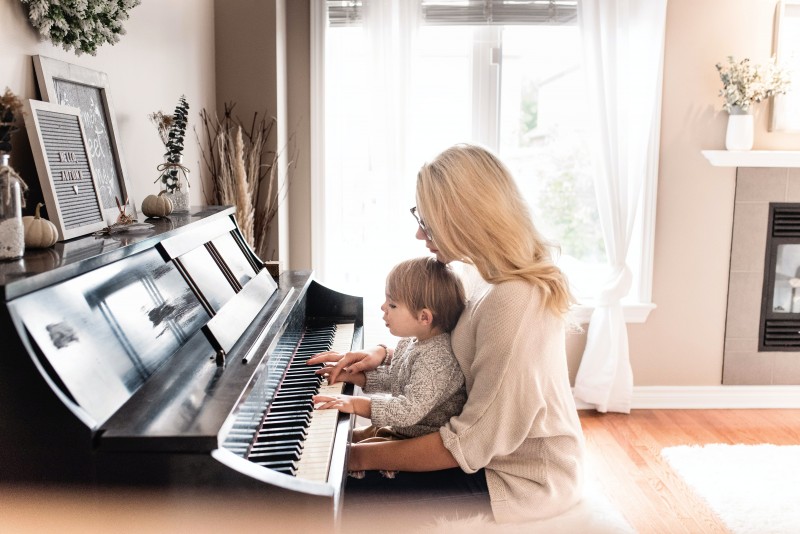
Yes, I’m probably wearing rose-tinted glasses… but as old ways recede, something new always appears.
New creative potential is springing up out of the constraints of COVID because life does that. I am not suggesting that every family is looking for a music teacher right now, but given that we may face a second wave of the virus in the autumn, many parents will be giving thought to how they might structure their child’s home life. This is an opportunity to strengthen musical engagement from the roots up.
Here are ten reasons why a new wave for music education and a new concert-going audience is likely to appear.
1. Children and young people have not taken part in their usual clubs and activities for a long while and need a challenge this autumn.
2. Parents have not spent money on the usual wide range of activities for their children and some are looking for life-affirming, structured activities that can enrich their children’s lives.
3. Parents and children have spent more time together, staving off boredom and frustration. In September, it will be time to start something new.
4. Instrumental music lessons establish weekly goals, a step-by-step approach and a learning gradient that is tailored to each individual child.
5. Instrumental music teachers guide parents by explaining how best to support their child’s daily music practice.
6. There’s more time to practise musical instruments and many music teachers have seen accelerated progress in recent months.
7. Remote teaching can be a little challenging, but it does work well and it’s more convenient in many ways as parents save time and money in terms of travel; remote teaching also helps to keep the air cleaner for this reason.
8. There are exciting, new opportunities to take up a musical instrument, as many brilliant professional performing musicians are now beginning to teach online.
9. We don’t know what will happen to the world of live music in the next few months, so a real shift towards teaching rather than performing is currently taking place.
10. This period of uncertainty might be exactly what is needed to spark an enormous new wave for music education.
If you are a music teacher and this resonates with you, let me support you further. Click here to sign up for my free video series on improving students’ focus in under five minutes, or here to leave a message.
My Three Wishes for Schools in 2020
1 January 2020

1. Let Schools be Schools
Many schools in the UK are also food banks; their classrooms are filled with donated clothes and toys. The generosity is heart-warming, but growing child poverty is a crisis of grim-realities and long-term consequences.
4.5 million children are living in poverty in the UK (trusselltrust.org) and teachers have had no choice, but to feed hungry pupils. They are constantly buying food for children to take home because the fridge and food cupboard are empty. Hungry children cannot concentrate for a single minute - I have seen young people in school faint from hunger.
For economically disadvantaged children and young people to gain the qualifications that will secure a prosperous future, a great deal of educational impetus is required. Teachers play a vital role in nurturing children’s capacity for learning and building trajectories for academic achievement, but at present, this role is diluted by having to think about hunger day after day.
Schools are highly responsive in tailoring their resources to meet the needs of their communities. However, school budgets have had to stretch to feed the growing numbers of children living in poverty. It is a matter of grave concern that resources are being diverted away from education to meet the children’s most basic survival needs.
2. Take action to prevent exclusions
A wave of redundancies due to cuts to school budgets, has been mirrored by an increase in the rate of school exclusions, undermining inclusivity and equality in the education system. Pupils who have benefited from close support and mentoring from teaching assistants in mainstream classrooms, but have been unable to manage unaided, have found themselves removed from school or placed in alternative provision. These disruptions have compromised not only their access to the curriculum, but also their chances of gaining qualifications.
3. Schools need modern educational values and larger budgets in 2020
Modern educational values and larger budgets are needed to inspire the learning of all children and young people. These should be delivered across complementary disciplines, and through effective systems that:
- Empower imaginative thinking and curiosity,
- Spark and focus creativity,
- Cultivate dynamism, intensity and drive.
- Provide adequate administrative support,
- Reduce teacher workload via a higher teacher-to-pupil ratio and,
- Allocate time and funds for teachers’ professional development.
Releasing Resistance to Reading
1 January 2017
It may seem odd to post on the topic of resistance on the first day of the year, but let’s not forget that the flip side of a new resolution involves effort to override old patterns.
Resistance is the entrenched furrow that our everyday thoughts have engraved in our mind. We feel resistance when the initial impetus of the ‘new’ wears off and the familiar old way begins to reassert itself.
This is an uncomfortable topic as resistance is a potentially self-sabotaging behaviour. It has the power to divert our efforts to try new things, unleashing opportunities to face our old fears and stories. It is only when resistance is ‘released’ that the benefits of new behaviours become permanent and lasting change becomes possible.
In fact, some of my most rewarding and meaningful experiences in teaching have involved releasing children’s resistance to reading, teamwork, group teaching, moving in time with others and music. This has happened in a very short timeframe, as part of the process of developing reading fluency through the Rhythm for Reading programme.
Rhythm induces a state of flow and people often talk about getting into a ‘rhythm’ or a ‘groove’ as part of their creative process and also in relation to exercising. Language processing is also sensitive to rhythmic flow states, for example when we become absorbed by a book or when we write and find that the writing starts to flow.
Interviewed about the factors that interfered with flow states, (see last month’s post for more on this) Csikszentmilhalyi’s informants described, ‘aspects of normative life’ which included: a sense of unmanageable fear, the pressure to work to deadlines and clock-watching. There was a general orientation towards the final outcome rather than the process - in other words, the journey. A focus on extrinsic rewards and material gain and also social rewards also seemed to block people’s ability to find flow, which tells us something about effects of consumer culture of that time. Even at the turn of the century there was an awareness that becoming mentally distracted was a growing problem and people also reported a confusion of attention. Lastly, isolation from nature was described as a big factor in people’s loss of flow. Thankfully, almost twenty years later, we are now more aware of the therapeutic value of spending time in nature..
From this list, it seems that the conditions of contemporary life may not only impede the development of flow states, but also reinforce the experience of resistance. Many of the items on this list pop up in our homes, places of work, schools and classrooms. As we move forward into 2017, perhaps, a fresh look at our everyday lives could help us to find and maintain flow states and make time for opportunities to gently release resistance.
Csikszentmihalyi: (1975; 2000) Beyond boredom and anxiety: Experiencing flow in work and play, 25th anniversary edition San Francisco, Jossey-Bass Inc.
Practising Poetry - the importance of rhythm for detecting grammatical structures
1 April 2016There are so many overlaps between poetry and music. People ask me frequently why it is that reciting poetry seems to help children, particularly those finding aspects of reading fluency and comprehension somewhat challenging.
Practising poetry by heart, particularly in group teaching is a massively experiential process. The feeling of the sounds in the movement of the face, the jaw and the tongue are dance-like sequences and enjoyed for their bold sensations, which in terms of conveying their mood, colourful tones and timbres are musical in every way. In terms of how it feels, reciting poetry is just like practising a musical instrument; indeed practising poetry through the congruence of movement, sounds and patterns is a deep and enriched form of language learning that we all can enjoy, having mastered this first as infants acquiring our mother-tongue (Nazzi et al., 1998).
If you read aloud or recite Lewis Carroll’s Jabberwocky, it’s easy to evoke the atmosphere and moods created by movement, rhythm and sound, even though the words of the poem are meaningless. Behind the expressive tones of the nonsense words, there’s a robust rhythmical structure and fascinatingly, researchers have found that we respond to the poem as if to a projected illusion of grammatical structure (Bonhage et al., 2015). The importance of rhythmical patterns is that they cast beams of expectation, helping to guide and focus our attention, enabling us to fully anticipate and enjoy all the more, the likely flow of the sounds and the colourful moods of the poem.
The usefulness of rhyme, so popular in children’s literature, is that it offers a fun and playfully supportive, highly accessible and very basic form of phonological awareness. Hearing the rhyming feature in words is a massive anchor for children who may arrive at school struggling to discern word boundaries in a stream of speech. This example of rhyme is from, ‘One fish, two fish, red fish, blue fish by Dr Seuss (1960):
This one has a little star. This one has a little car. Say! what a lot of fish there are.
Rhyming words are also invaluable for those children who come to school with a clearer grasp of language. Children are stimulated by rhymes, because rather than simply following the language of the poem, they are more deliberately focussing their attention in order to predict the placing of the rhyming word at the end of the line or phrase. For these reasons it is not surprising that highly rhythmically aware children are more likely to become good readers (Tierney and Kraus, 2013) – they arrive at school able to anticipate and enjoy the structure of rhythmic patterns in language. Similarly, children who may require a reading intervention thrive when practising poetry because the explicit rhythmical structure and shorter phrase lengths support their attention, helping them to perceive the meaningful elements of language more easily.
In the Rhythm for Reading programme, we takes this principle further still, by providing rhythm-based reading tasks that give the children a chance to build their awareness of rhythmic patterns very rapidly. The sessions are a highly condensed extraction from traditional musical training. Building a strong response to rhythmical patterns, children develop and sustain their attention across increasingly complex musical phrases. Their awareness of rhythm transfers into their reading development after only a few ten-minute sessions.
If you liked this blog post, you are invited to subscribe to my weekly updates for interesting insights into rhythm, language and learning.
Bonhage, Corinna E., et al. (2015) “Combined eye tracking and fMRI reveals neural basis of linguistic predictions during sentence comprehension.” Cortex 68, 33-45
Dr Seuss (1960) One fish two fish red fish blue fish, Random House
Nazzi, T., Bertoncini, J. and Mehler, J. (1998). Language discrimination by newborns: Towards an understanding of the role of rhythm, Journal of Experimental Psychology: Human Perception and Performance, 24, 756-766
Tierney A, Kraus N (2013) Music training for the development of reading skills. Prog Brain Res 207:209 –241