
The Rhythm for Reading blog
All posts tagged 'teachers'
Wishing you Peace at Christmas time: Rest and Replenish
20 December 2023
Tomorrow night is the longest night of the year in the northern hemisphere and here in London, the heavy grey clouds and the weight of the damp atmosphere have added a dense layer to the fatigue we are all feeling right now.
So as the school term draws to an end, I thought I’d share reflections on one of my favourite picture books: “A Seed is Sleepy,” by Diana Hutts Aston and Sylvia Long, published by Chronicle Books, San Francisco, California.
‘A seed is sleepy.
It lies there, tucked inside its flower,
On its cone, or beneath the soil, Snug, Still.’
This is the time to reclaim our need to sleep, and to sleep long and deeply. This is the season for rest, and teachers, having given out so much energy every single day, need this. Nothing is more important than rest and recovery after a long term of thirteen or even fourteen weeks. This is the time to be still and snug in the dark and the quiet of the longest winter night.
The time that a seed may take to reveal itself is encoded in its DNA. Each seed needs its own allotted period of time. There is no rushing this process. Some seeds need ten years and some need even longer.
‘Not all seeds are eager to germinate.
Some have lain dormant, or slept undisturbed,
For more than a thousand years.’
We need sufficient time to replenish our own physical energy and this applies to each and every cell. There might be a feeling of numbness. We might feel a little spaced out because of sheer exhaustion - a bit like being jet-lagged. We might feel tearful and emotional, or jittery and struggle to unwind. This is especially true if we have been chronically overstretched and have strained our nervous system without having a chance to recover. The seed shows us what to do.
‘Part of the seed, the root,
Feels the tug of gravity and
Digs down deep.’
The work of the seed is nourishment. Resting and recharging is also about spending time on replenishment. Just like a seed, our nervous system seeks out minerals and hydration. Little by little, as recovery progresses we realise that we are ready to receive light and love from our friends and family. There is, however no rush in the life of the seed. It can take time to reach upwards.
‘It knows to seek the sunlight
To push itself up, up, up
Through the soil But it must
Wait awhile before that happens.’
Each seed takes its own time. The diversity of seeds is part of the great mystery of nature. The tallest trees grow from the tiniest seeds and the most exquisite fruit of all (coco de mer) sprouts from the largest pod. Every shape and size in between has been designed through millions of years of evolution, adaptation and plenty of rest.
Happy Christmas! Rest well dear friends!
Danna Hutts Aston and Sylvia Long (2007) A Seed is Sleepy, Published by Cronicle Books, San Francisco, CA
It’s anti-bullying week: How does fear affect learning?
15 November 2023
Recently, I read that an act of aggression is a natural ‘active coping strategy’ and is rewarded by a dopamine hit. Conversely, a submissive, ’passive coping strategy’ results in stress-induced withdrawal and even generates a ‘shutdown’, an immediate energy-conserving behavioural response. The setting for these social experiments was a laboratory. The brains of mice and rats were dissected following each behavioural task. Slices of tissue were examined to determine the levels of reward and stress induced by each type of ‘social situation’ manipulated by the researchers.
How does this relate to anti-bullying week? Well, in terms of brain structure, neurochemistry and behavioural responses, mice and rats are considered to bear a close enough resemblance to humans to deem such work ethical, justifiable and relevant.
Are children born knowing that bullying is inherently immoral, or, are we dealing with impulses that are ‘natural’ and therefore ‘justified’ on the grounds that ‘children will be children’?
This is the question that Ruter Bregman addressed in his wonderful book, ‘Human kind’. On the one hand, there is the view that humans may possess abhorrent traits, for example, John Adams’ vision of all men as ‘potential tyrants’ and Sigmund Freud’s thesis that we descended from ‘generations of murderers’. On the other hand, Rousseau’s much earlier realisation that the moral compass of humans had in fact been corrupted by land ownership and the extent to which social institutions (such as the baronial system) rewarded competitive and ‘loyal’ behaviour with enhanced social status, titles and land. This socially hierarchical system was normalised to such an extent that as humans, we lost touch with our natural compassion, health and vigour. Moreover, Bregman’s research showed that Rousseau’s argument was supported by countless examples of human courage and kindness. Furthermore, he discovered that explorers of the eighteenth century and the mainstream media had constructed blatantly false narratives that claimed dreadful events of human brutality had taken place, particularly within communities that lived traditional life-ways.
In the past year, stories of bullying as a global phenomenon have peppered the mainstream news. These have included an account by Raphael Rashid of a weekend rally of 200,000 South Korean school teachers protesting against the harassment they received from parents and that among their colleagues, one hundred teachers’ lives had been lost to suicide.
In southern California, Ramon Antonio Vargas reported on the lawsuit brought by the parents of fourteen year old school boy Diego Stoltz against the school district. Two of Diego’s own classmates had verbally and physically assaulted him, and he had lost his life to the injuries nine days after the attack. This took place on the school premises at lunchtime and another child had videoed the violence. This story shows that there is no room for complacency when enforcing an anti-bullying policy. Bullying is not just dangerous and corrosive, it can be fatal.
Complacency can be driven by an unease around standing up to bullying. However, in a school with effective leadership, where it is not tolerated at all, a strong ethos exists in terms of respect for teachers, pupils, learning equipment, school uniform and the fabric of the building. Expectations of high standards, however, are not necessarily self-sustaining: they are earned through consistent maintenance - it takes effort to keep children safe.
I visit schools every week and see teachers working hard to ensure that respect is maintained by a deliberate commitment to upholding the high behavioural values of the school. This is clearly visible when pupils move between lessons in every corridor and flight of stairs.
It is easy for standards to slide. When this happens, how might bullying affect learning? There are two main ways. First, if the atmosphere in a school lacks respect and tolerance, then pupils will feel hyper-vigilant and their attention will drift because they are alert for the wrong reasons, anticipating threat and wondering how to strategically position themselves for safety. This response is a necessary behavioural adaptation, but it diminishes cognitive focus, control and recall. Learning suffers.
The second way bullying affects learning is more insidious. It’s a narrowing of the bandwidth of ideas that pupils are willing to contribute and the questions that they are willing to ask in a classroom where individual contributions are not respected. In a culture of bullying, the perspective of the bully overrules opportunities for discussion, clarification and exploration. To move beyond ‘one size answers’, to ‘multiple answers’, pupils need to feel comfortable with expressing individual opinions or engaging with perspective-taking and the influence of context.
Deeper learning is also limited for one more reason, the so-called ‘narrowing of the curriculum’. The squeezing of arts subjects to the periphery of the curriculum is a huge loss in itself, but particularly so in this context, as arts subjects cultivate discipline, self-expression, dialogue, and prioritise collaborative working.
To conclude, the importance of enforcing an effective anti-bullying policy cannot be overstated. It is more than a matter of wearing odd-socks on ‘Odd socks day’. All schools must become places of safety, security and respect. Pupils who already carry visible negative effects from exposure to stress in early childhood, for example, need to know they will not be targeted, as they are vulnerable through no fault of their own. They deserve to focus their attention on learning and thriving as much as anybody else.
Research shows that headteachers who are successful leaders, with a strong vision and a clear set of values, have established an ethos of respectful conduct for everyone in the school community. An anti-bullying policy that works at all levels of implementation is the key to maintaining an effective and inclusive learning environment.
If you enjoyed this post, sign up for free Insights to get a weekly newsletter and special discounts on Rhythm for Reading Online Programmes.
Read more about this topic by clicking the links below
We often hear about the dangers of cyberspace, where cyber-bullying is rife and children are vulnerable. Now imagine for a moment the relief of reaching the ultimate refuge. Temenos is a Greek concept that describes a sanctuary, a space of absolute safety and harmonious balance, where individuals uphold an immutable self-respect and where criticism and judgment are suspended.
Mythical tales of abandonment, involving fear of the jaws of death followed by the joy of reunion are familiar themes in stories from all around the world. Sound is a primal medium of connection and communication via mid brain processes that are rapid, subjective, subtle and subconscious. Similarly, the telling of stories, the recitation of poems and songs are also examples of how auditory signals are woven together to communicate for example fear, distress and joyful reunion, or other emotions.
Rhythm and reading comprehension 1/5
In the Simple View of Reading, reading comprehension is described as the ‘product of’ skilled decoding and linguistic comprehension (Gough & Tumner, 1986). The recent focus on oracy (for example Barton, 2018) highlights a focus in some schools on linguistic comprehension. According to researchers, the proportion of children beginning school with speech, language and communication needs is estimated at between 7 and 20 per cent (McKean, 2017) and unfortunately, communication issues carry a risk of low self-esteem and problems with self-confidence (Dockerall et al., 2017).
References
Rutger Bregman, Human kind: A hopeful history, Bloomsbury Publishing
Raphael Rashid, South Korean teachers stage walkout over harassment by parents and students 4th September 23, accessed 26th October 23
Ramon Antonio Vargas and agencies, Family of boy, 13, who died after bullying attack get $27 million from school district, 15th September 23, accessed 26th October 23
Rhythm, breath and well-being
10 October 2022
Breath is an important part of the Rhythm for Reading programme. We use our voices as a team in different ways and this engages our breath. In the early stages of the programme we use rapid fire responses to learn the names of musical notes and our breath is short, sharp and strong - just like the sounds of our voices. Even in the first session of the programme we convert our knowledge of musical notes into fluent reading of musical notation and when we do this our breath changes. Instead of individual utterances, we achieve a flowing coherent stream of note names and our breath flows across the length of the musical phrase for approximately six seconds. This time window of between five and seven seconds is a universal in human cultures. Did you know that the majority of poems are organised rhythmically into meaningful units of between five and seven seconds in duration?
A long slow exhalation is associated with calming the nervous system, even though the energy in the Rhythm for Reading session is playful and the sense of teamwork is energising. The unity between the children and teachers taking part in the programme fosters a sense of belonging which further boosts well-being alongside the calming effect of the long slow exhale.
When I first meet teachers, they often share that they feel anxious about reading musical notation, but one of the most beneficial aspects of taking part, is that our long slow exhale as a group is actually an effective way to sooth anxiety. The smiles at the end of the first musical phrase show a powerful release of emotional tension through the unity of rhythm and breath.
7 Reasons why goal-setting matters more than you might think
1 September 2020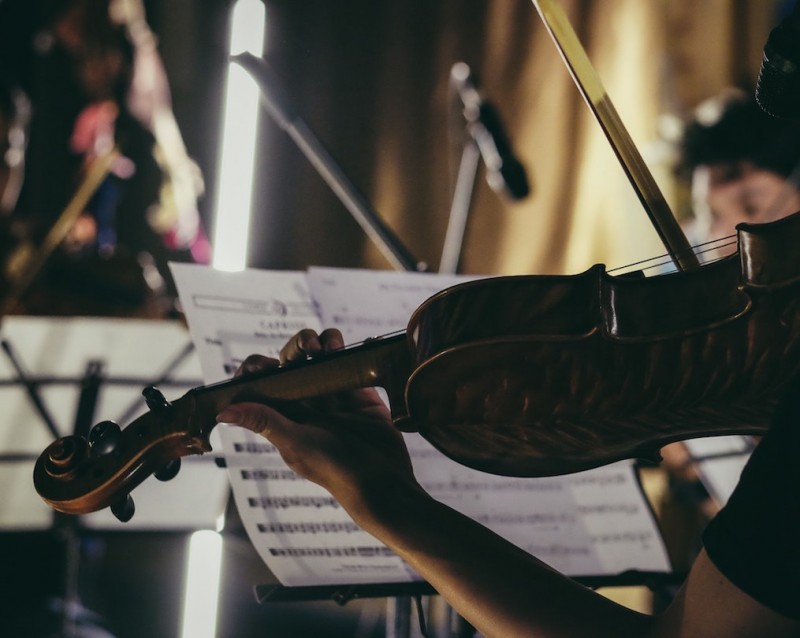
Mastering a musical instrument takes years of dedication. A music teacher who has already spent a lifetime on this journey, is the guide along the way and travels the path to mastery with every student. She knows exactly where each student is in terms of making progress and can describe in great detail what is happening in the music lessons.
Given that the music teacher offers a path to mastery and has lived that path every day for decades- why would goal-setting really matter?
Here are seven reasons why:
1. Goal-setting renews the relationship between the teacher and student. This is a life-affirming conversation in which the teacher can welcome each student back after a break and say to them, “I believe in you…I know you can do this”. Goal-setting offers the most uplifting start to the new term and can inspire a fresh new wave of commitment to making music with passion and vitality.
2. Goal-setting can alleviate stress. If I was a teenager right now, I would be feeling very sad without my musical ensembles - I adored being immersed in music with my friends and we had so much fun during the summer. Our students are likely to be suffering the loss of their musical ensembles and missing the buzz of group music-making. Organising remote concerts on a weekly basis as an important part of goal-setting will offset musical isolation.
3. Goal-setting clarifies the context. September is always a month of change. Perhaps your student has a new school, new travel arrangements, new responsibilities, or new musical or sports opportunities. With the excitement of a fresh new start, there will also be a demanding process of transition to consider. Settling into a new school takes at least six months - relationships with teachers and friends need to be built gradually over time. Being aware of your student’s challenges and opportunities this September clarifies what’s possible. This matters because it’s essential that goals are realistic and can be reached.
4. Goal-setting sets the tone for the term. Aspirational students like to set up a new routine at the begin of the school year. When and where have they scheduled their music practice? Whether your students are aspirational or not, a goal-setting conversation is the perfect way to guide them in choosing the best possible time for music practice. Take care to cultivate their ownership of this process, but also to protect them from feeling overwhelmed or sliding towards perfectionism.
5. Goal-setting warmly embraces parental expectations. This conversation allows the teacher to share with the parent a timely segment of their over-arching vision for the student. Each goal is anchored to the teacher’s expertise - and here’s a gentle reminder that this expertise often has a lineage reaching back through generations of dedicated teachers. Parents want to be informed and guided by an expert teacher; confidence in goal-setting allows a music teacher to demonstrate that their expertise is grounded within an organised and methodical system.
6. Goal-setting helps to align our teaching practice with our musical purpose. Stephen Covey is know for recommending that we ‘Begin with the end in mind’ - this is the second habit from his book, ‘The 7 habits of highly effective people’. This phrase applies to goal-setting. All the goals we set for music-making lead us to the very centre of our musical aims - our ‘why’ - our inspiration. It might be the memory of attending a special performance, a vision for playing with ultimate freedom of expression, or simply to feel the sublime expansion of pure creativity. The ‘why’ is our purpose. It inspires our musical values. These influence the way that we teach by guiding our decisions, our priorities and our aspirations for all our students.
7. Goal-setting strengthens the musical landscape at grassroots level. Since our musical world contracted in 2020, with socially-distanced concerts at the tip of a rapidly melting iceberg, the role that music teachers now play in cultivating the next generation of performers and audiences is of huge importance. We are responsible for ‘holding space’ for music and musicians. We are helping to sustain vibrant music making in our students’ homes, as well as lighting up musical horizons in every community through the transformational power of our teaching. We are not on our own. Music examination boards such as ABRSM are still supporting music teachers by offering practical and theory exams during the pandemic.
I hope these ideas about goal-setting offer some encouragement as we continue remote and socially-distanced teaching. If this post has resonated and you would like to explore these ideas a little further, I’ve created a three short videos about setting-goals. Click here for the videos and to leave a comment or ask a question click here .
A New Wave for Music Education?
2 August 2020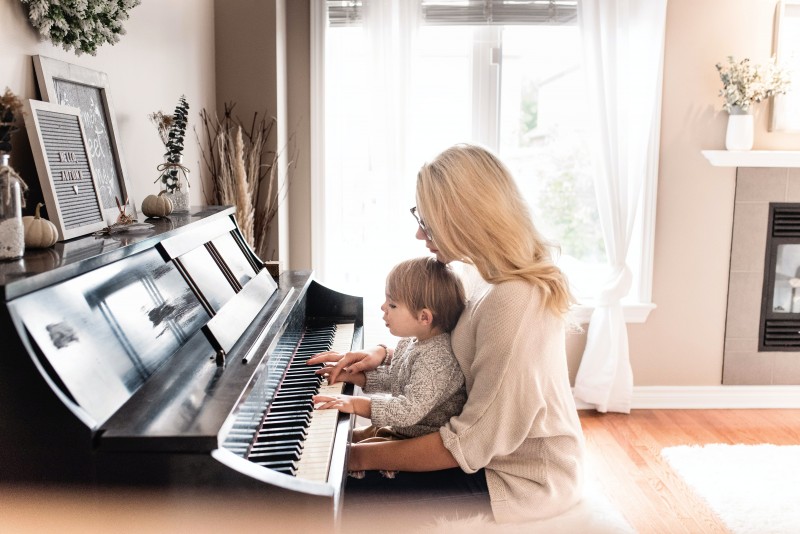
Yes, I’m probably wearing rose-tinted glasses… but as old ways recede, something new always appears.
New creative potential is springing up out of the constraints of COVID because life does that. I am not suggesting that every family is looking for a music teacher right now, but given that we may face a second wave of the virus in the autumn, many parents will be giving thought to how they might structure their child’s home life. This is an opportunity to strengthen musical engagement from the roots up.
Here are ten reasons why a new wave for music education and a new concert-going audience is likely to appear.
1. Children and young people have not taken part in their usual clubs and activities for a long while and need a challenge this autumn.
2. Parents have not spent money on the usual wide range of activities for their children and some are looking for life-affirming, structured activities that can enrich their children’s lives.
3. Parents and children have spent more time together, staving off boredom and frustration. In September, it will be time to start something new.
4. Instrumental music lessons establish weekly goals, a step-by-step approach and a learning gradient that is tailored to each individual child.
5. Instrumental music teachers guide parents by explaining how best to support their child’s daily music practice.
6. There’s more time to practise musical instruments and many music teachers have seen accelerated progress in recent months.
7. Remote teaching can be a little challenging, but it does work well and it’s more convenient in many ways as parents save time and money in terms of travel; remote teaching also helps to keep the air cleaner for this reason.
8. There are exciting, new opportunities to take up a musical instrument, as many brilliant professional performing musicians are now beginning to teach online.
9. We don’t know what will happen to the world of live music in the next few months, so a real shift towards teaching rather than performing is currently taking place.
10. This period of uncertainty might be exactly what is needed to spark an enormous new wave for music education.
If you are a music teacher and this resonates with you, let me support you further. Click here to sign up for my free video series on improving students’ focus in under five minutes, or here to leave a message.
My Three Wishes for Schools in 2020
1 January 2020

1. Let Schools be Schools
Many schools in the UK are also food banks; their classrooms are filled with donated clothes and toys. The generosity is heart-warming, but growing child poverty is a crisis of grim-realities and long-term consequences.
4.5 million children are living in poverty in the UK (trusselltrust.org) and teachers have had no choice, but to feed hungry pupils. They are constantly buying food for children to take home because the fridge and food cupboard are empty. Hungry children cannot concentrate for a single minute - I have seen young people in school faint from hunger.
For economically disadvantaged children and young people to gain the qualifications that will secure a prosperous future, a great deal of educational impetus is required. Teachers play a vital role in nurturing children’s capacity for learning and building trajectories for academic achievement, but at present, this role is diluted by having to think about hunger day after day.
Schools are highly responsive in tailoring their resources to meet the needs of their communities. However, school budgets have had to stretch to feed the growing numbers of children living in poverty. It is a matter of grave concern that resources are being diverted away from education to meet the children’s most basic survival needs.
2. Take action to prevent exclusions
A wave of redundancies due to cuts to school budgets, has been mirrored by an increase in the rate of school exclusions, undermining inclusivity and equality in the education system. Pupils who have benefited from close support and mentoring from teaching assistants in mainstream classrooms, but have been unable to manage unaided, have found themselves removed from school or placed in alternative provision. These disruptions have compromised not only their access to the curriculum, but also their chances of gaining qualifications.
3. Schools need modern educational values and larger budgets in 2020
Modern educational values and larger budgets are needed to inspire the learning of all children and young people. These should be delivered across complementary disciplines, and through effective systems that:
- Empower imaginative thinking and curiosity,
- Spark and focus creativity,
- Cultivate dynamism, intensity and drive.
- Provide adequate administrative support,
- Reduce teacher workload via a higher teacher-to-pupil ratio and,
- Allocate time and funds for teachers’ professional development.
Connectedness in the Rhythm for Reading programme
16 July 2015At this time of year it’s good to feel that much has been accomplished. Reading programmes have been completed, training delivered, progress measured, reports read, certificates received and so on. However, educating children and young people is about so much more than ticking lists of to dos.
I’m so grateful to work with fabulous teachers in the schools that I visit on my travels with the Rhythm for Reading programme and I’ve experienced close-up their boundless enthusiasm, interest in trying new things and dedication to supporting their pupils in every possible way. Accelerating progress and boosting wellbeing are important educational goals of course, but equally prominent should be the development of a very profound sense of social connectedness in our group teaching. A ten-year old boy explained this very clearly to me recently,
“It made me feel welcome to the group because everyone was doing the same thing. Everybody knew it. I didn’t feel left out because usually I feel left out in a group.”
For me, this suggests that some children respond particularly positively to the highly structured group activities of the reading intervention. The phrase, ‘Everybody knew it’ mirrors the emotional security that develops when the certainty of knowing exactly what to do and say, is complemented by knowing how to contribute with confidence. When the barrier of uncertainty has been eliminated, learning can be experienced as a limitless, virtuous cycle.
In this particular instance, the virtuous cycle was achieved through highly structured Rhythm for Reading programme group sessions in which the synchronised response of the group was an intrinsic element of the pedagogy. The group grew in confidence week by week, as the tasks that they accomplished together during the reading programme became increasingly intricate, fast-paced and complex; consequently they enjoyed a profoundly social experience of learning.
I’m reminded by Hall, Curtin & Rutherford to mention Lave’s pertinent advice – which is so relevant here and now: Learning is not something in itself, it is part of social life. (Hall et al., 2014, p.166)
Hall, K., Curtin, A. and Rutherford, V. (2014). Networks of Minds: Learning, Culture and Neuroscience, London and New York, Routledge
Lave, J. (1996). Teaching, as learning, in practice. Mind, Culture and Activity 3(3): 149-164
The Power of Music – Reflections
15 February 2015The Power of Music - a research synthesis of the impact of actively making music on the intellectual, social and personal development of children and young people, by internationally renowned Professor Susan Hallam MBE, University College London, Institute of Education was published at the end of January 2015. The review brings together more than 600 scholarly publications, which provide compelling evidence of the positive effect of music on literacy, numeracy, personal and social skills to support the argument for the inclusion of music in the education of every child and young person.
Music, more than any other discipline consists of ways of doing things (techniques and methods) and ways of being (empathy, intention, style etc). Perhaps, the most important of these is how to listen well. Children, immersed in their family and home environment from pre-birth to school age, have learned nearly everything they know about their language and culture through listening. A high quality musical education develops listening far beyond the everyday level by enhancing and deepening communication; it also refines physical coordination skills far beyond what can be achieved through sport. The unique combination of these elements contributes immensely to pupil well-being and to learning.
The value of a high quality musical education in primary school, consisting of the integration of listening skills with singing, physical coordination and notation reading skills cannot be overstated. As musicians we have a huge responsibility to equip primary teachers with great tools, and training of the highest quality so that they feel confident, secure and empowered in this exciting and creative role. Through the Rhythm for Reading programme, with access to our group teaching methods and with all the tools and training that we have developed, all primary teachers can deliver a high quality musical education, bring the power of music into their classrooms and witness the profoundly vibrant effects of music education on reading fluency, listening skills and much more.